
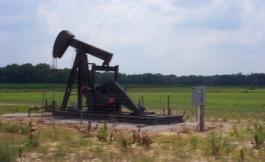


Omega Technologies has developed several innovative solutions to improving oil and gas operations. It now offers (a) a low cost tubing rotator (TSR) o reduce rod pumping failures and tubing leaks, and (b) a side stream flush restrictor (SFR) to save electricity, improve continuous chemical injection systems, and reduce pumping failures.
***The tubing rotator, patent pending,:
(a) reduces pumping failures by over 75% (actual field results on 25 wells)
(b) may reduce emissions or oxygen entry into wellhead (has additional seals)
(c) is priced around 1/3 the cost of other flanged rotators
(d) is made for Larkin or Cap type heads (other rotators are for flanged wellheads)
(e) takes about 30 seconds of a pumper/treaters time per month to rotate the tubing
(f) generates over 40% to 100% Rate of Returns on wells that fail more often than once every two years (NOT JUST PROBLEM WELLS).
(g) uses manual rotation (recommended where corrosion inhibitors are utilized)
This rotation spreads the wear around the tubing caused by rods, rod boxes, or rod guides. It benefits tubing splits and even corrosion holes (due to film inhibitor being wiped off by the rods or rod guides). Please clink on the link to our products for more information on this significant innovation to reduce expenses and increase reserves.
***The sidestream flush (or slip stream flush) restrictor, patent pending, uses a small diameter flush line in conjunction with a small filter that juts out into the flowline to regulate the volume of flush going back down into the wellhead. The chemical is normally injected into a tee that is hooked up to the sidestream flush design. This design is used in lieu of a choke or needle valve commonly employed in the sidesteam flush to regulate fluids because it:
(a) saves energy by reducing the flush volumes going down the annulus
(b) has less or no plugging of the flush line due to particles sticking in the choke
(c) has less freezing problems due to higher velocities in line keeps line warmer
In actual tests, one field was averaging 75 bpd per well of sidestream flush with the conventional needle valve choke method (normally flush rates are untested and unknown). The sidesteam flush restrictor was installed in 700 wells saving 625 kilowatts of electricity by reducing the flush rates to 5 to 20 bpd. In addition, many of the wells were slowed down while still pumping the maximum amount of reservoir fluids, which save on rod pumping repair costs.Please clink on the link to our products for more information on this significant innovation to reduce expenses and increase reserves.
Expense Improvements have been realized through the application of new innovations, common sense engineering solutions, and/or bringing old technology from around the world into a new area. Accomplishments involved electricity contract and usage savings, rod pump failure analysis and reduction, ESP run time improvement, gas lift modifications, PD pump vibration reduction, injection well cleanout and filter improvements, manpower productivity enhancements, drilling and workover cost savings, chemical cost and application improvements, and surface pump optimizations.
RESERVOIR PRODUCTIVITY
Reservoir Productivity and Injectivity improvements have been realized through wellbore improvements, reservoir enhancements, and finding new reservoirs. Techniques utilized involved time lapse logging, pulsed neutron log analysis in shaley sands (SPWLA Paper), low resistivity oil pay sands, fracture optimization, increased water injection, waterflood realignment, repairing behind pipe channels (SPE Paper), improving workover fluids, recalibration of GR-NL logs to detect oil or gas, and overall field management.